KATSEYE on How Gnarly Backlash Shaped Their Artistry
KATSEYE reflects on the polarizing reception to 'Gnarly' and why controversy changed how they think about their music.
Something Dope · · 4 min read
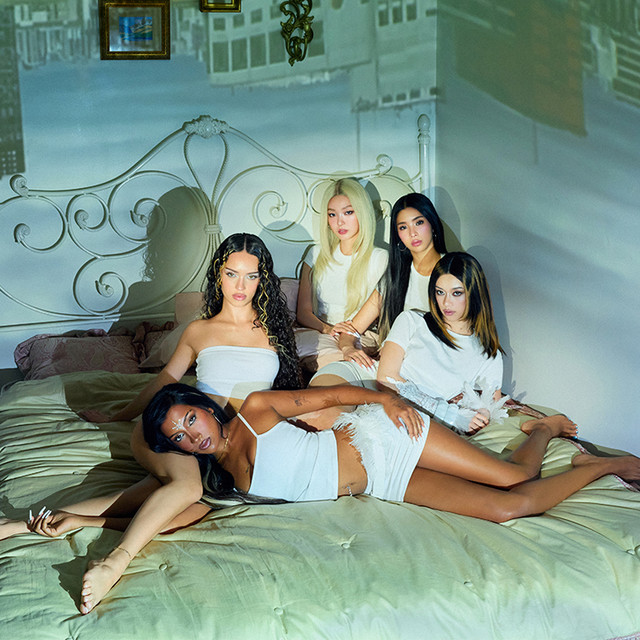
KATSEYE came out of their Dream Academy training with tight choreography, polished presentation, and a very specific expectation from early fans about what they were supposed to sound like. Then they dropped "Gnarly," and the internet let them know exactly how it felt about that.
In a recent conversation on the Nicky at Night podcast, the global girl group looked back on the rough early reception to "Gnarly" and talked through how watching the song find its audience over time completely rewired how they think about criticism and risk. The takeaway is simple but worth hearing: being polarizing and misfiring are not the same thing.
What the 'Gnarly' Backlash Actually Taught Them
When "Gnarly" first dropped, the response was sharp. Listeners were confused, some were dismissive, and the group felt it. Member Sophia pointed to Lady Gaga as the reference point that helped reframe the moment. Gaga has built an entire career on releasing things people don't immediately understand, leaning fully into her artistry even when the audience isn't ready.
"She fully puts her full artistry into something," Sophia said on the podcast, explaining that Gaga's willingness to challenge listeners rather than comfort them resonated with where KATSEYE wanted to go as a group.
Sophia framed the backlash not as a failure signal but as proof the song was doing something. "For us to have a moment where we came out with something and everyone's like, 'This is horrible. Like, why would you come out with that?' made us realize that's the artistry: Putting out something so interesting and impactful."
Member Lara added that the whole experience taught the group they don't need external validation to feel confident in their own work. "I think the controversy of 'Gnarly' prepared us to do that for the rest of our career," she said.
How 'Gnarly' Actually Performed on the Charts
"Gnarly" did not stay in the backlash column for long. The song climbed to No. 82 on the Billboard Hot 100, marking KATSEYE's first appearance on the chart. For a group still in the early stages of its post-Dream Academy era, cracking the Hot 100 with the exact song people said they should walk back is a real moment.
That trajectory, from harsh criticism to charting fan favorite, gave the group a concrete case study in how quickly public opinion moves. What reads as a misfire in week one can become the song people cite when they talk about why they became a fan.
Lara put the group's goal plainly: "We want it to, like, stick in people's heads." That instinct, prioritizing memorability over immediate approval, is a more sophisticated artistic position than most groups at this stage are willing to take publicly.
KATSEYE has since released additional music under this evolving creative approach. Their "WILD" EP extended the group's willingness to move outside the expected K-pop adjacent pop framework, and a recent collab with Kuromi for a Target collection showed the group operating across merchandise and brand partnerships as well. The group is building out its identity on multiple fronts simultaneously.
What This Means for Independent Artists Watching Their Career
The KATSEYE "Gnarly" arc is worth paying attention to if you are an independent artist or a small label trying to figure out when to hold your ground on a creative direction that isn't landing yet.
The instinct when backlash hits is to course-correct fast, to pull the single, to apologize with your next release, to give people something safer. KATSEYE did none of that. They stood behind the track, let the cycle play out, and ended up charting it. That is the case study.
It also points to something real about how discovery works in 2025. A polarizing reaction is still a reaction. Confusion and dismissal generate conversation. Conversation generates streams. Streams generate chart movement. "Gnarly" didn't succeed despite the controversy. The controversy was part of the mechanism.
For artists navigating their own moments of public pushback, the question KATSEYE is implicitly asking is worth sitting with: are people saying this is bad, or are they just saying it's unfamiliar? Those are different problems with different answers.
Keep watching KATSEYE. If "Gnarly" is the blueprint they're building from, the next release will tell you a lot about how serious they are about that.
Read next


Built for indie artists
Get in the room.
Submit your music to perform at our next event. Pull up to one we have on the calendar. Stay close to the people building the next wave.